

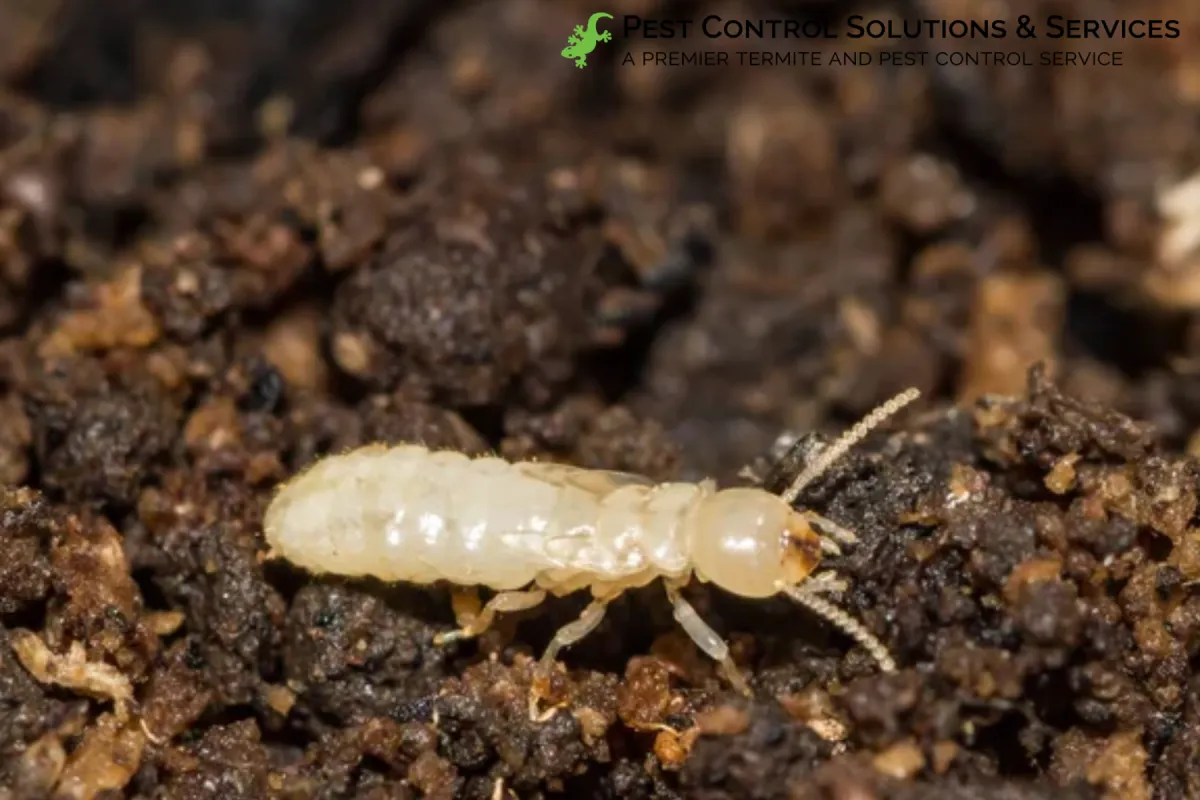
To identify subterranean termite mud tubes vs. drywood frass, look for dirt-based tunnels on foundations or walls compared to loose piles of sand-like pellets. It construct wet, pencil-thick earthen tubes to travel safely from soil to wood. Drywood live entirely inside the timber, kicking out tiny, dry, six-sided hexagonal pellets through pinholes.
The Primary Evidence Left by Subterranean and Drywood Termites
Different species leave distinct structural clues depending on where they live and how they absorb moisture. Spotting these signs early is the key to preventing widespread property damage to your structural framing. If you misidentify the evidence, you risk using a treatment that leaves the actual colony completely untouched.
During a recent structural inspection for a family in Pasco County, we evaluated a home where the owner noticed a small mound of debris on a window ledger. They assumed it was just dirt tracking from outdoor ants and wiped it away, missing the fact that it was actually a drywood colony pushing waste out through the window casing. This is a classic example of why understanding specific insect evidence is critical for long-term home safety.
Subterranean termites require constant contact with ground moisture to survive. Because their skin is incredibly thin, they dry out and perish quickly when exposed to the open air. To solve this problem, workers mix soil, saliva, and digested wood to build enclosed tunnels. These earthen conduits shield the colony from predators and maintain a humid environment as the insects migrate upward from the dirt into your home’s framing.
Unlike their ground-dwelling relatives, drywood termites do not need soil moisture to survive. They get all the water they need from the wood they consume, allowing them to live entirely inside the wooden beams they destroy. As they hollow out internal galleries, they need to clear out their living spaces. They drill tiny “kick-out holes” about the size of a pinhead and push out their waste, creating noticeable mounds of pellets directly beneath the damaged timber.
Mud Tubes vs. Frass Pellets: Diagnostic Comparison
Correctly identifying these two distinct signs ensures you choose the right management approach. Ground-dwelling species require targeted soil treatments or monitoring stations, while wood-dwelling species usually require localized wood injections or structural tenting.
Making the wrong choice can waste your home maintenance budget on treatments that do not address the root issue. Proper identification is always the first step toward effective subterranean termite control.
| Visual & Physical Feature | Subterranean Termite Mud Tubes | Drywood Termite Frass Pellets |
| Material Composition | Dried mud, soil particles, and wood fragments | Pure digested wood feces (no dirt or sand) |
| Physical Shape | Long, continuous, branching pencil-width tubes | Microscopic, identical six-sided oval pellets |
| Primary Location | Concrete foundations, drywall, floor joists, sills | Windowsills, floors beneath wood beams, furniture |
| Texture to the Touch | Gritty, brittle, crumbles into dirt when pinched | Dry, hard, rolls easily between fingers like coarse sand |
| Color Spectrum | Dark brown to tan (matches local yard soil) | Varies from light tan to dark black (matches the color of the wood eaten) |
4 Field Tests to Tell the Difference in Your Home
If you find mysterious debris or structural residue on your property, use this step-by-step diagnostic process to confirm the target pest before taking action with professional pest control in Pasco County, FL.
- The Pinch and Roll Test: Pick up a small amount of the material between your fingers. If it easily crumbles into fine, powdery dirt, you are looking at a subterranean mud tube. If it keeps its solid, granular shape and rolls like hard grains of salt, it is drywood frass.
- The Magnifying Glass Angle Check: Look closely at the loose granules under a magnifying glass or your smartphone camera zoomed in. If the pellets feature six clearly defined, indented concave sides, it is definitive proof of drywood termites.
- The Active Scraping Method: Break away a small section of a mud tunnel found on a concrete wall. If the tube is active, worker termites will quickly emerge to inspect the damage and completely rebuild the broken gap with fresh, wet mud within 24 to 48 hours.
- The Height and Source Audit: Trace where the sign points. If the debris originates from a tiny pinhole directly overhead in a structural ceiling beam, it is a drywood kick-out spot. If the line runs continuously down to the soil line or concrete foundation, it is a subterranean pathway.
Applying our Tailored Protection Packages to Solve This
At Pest Control Solutions & Services, we operate as a professional, reliable, and deeply customer-centric team. As a local mom-and-pop business with the operational scale and capability of a mid-sized company, we offer highly personalized, hands-on service while protecting homes all across Florida. The safety and well-being of your family and pets guide every decision we make, which is why we combine rigorous technician training with the safest, most effective industry methods.
We approach defense with absolute precision. For properties facing subterranean threats, we implement the Trelona ATBS (Advanced Termite Baiting System) around the structure’s outer perimeter. This advanced monitoring system features interceptive bait matrices that foraging nuisance find more quickly than in traditional systems. Once ingested, the active ingredient disrupts their molting process, safely eliminating the entire underground colony before they can even touch your foundation.
For properties that require a continuous chemical shield along the foundation line, we deploy our premier Termidor Trench & Treat service. Our expert technicians dig a precise, shallow trench around the exterior footings and apply an advanced termiticide that bonds securely to soil particles. Because this material is completely non-repellent, foraging termites walk through it without detecting it, unknowingly carrying the active agent back to the nest. This transfer effect shuts down the colony’s reproductive system without requiring heavy chemical applications in your living areas.
We prioritize the use of safe, green, and effective pesticides whenever possible, ensuring our treatments remain highly effective while being environmentally responsible. If you are searching for a highly trained exterminator in Pasco County, FL, our team delivers tailored, hands-on solutions that provide long-lasting protection with total integrity.
Debunking the Myth: “All Termite Damage Looks the Same on the Inside”
The most common misconception among property owners is that all wood-destroying insects hollow out timber in the exact same pattern. Many homeowners delay calling a professional Pasco County pest control company because they assume any hollow-sounding wood can be treated with a simple generic spray.
In reality, the interior galleries look completely different depending on the species. Subterranean termites eat exclusively along the soft grain of the wood, chewing out long, hollow channels that they pack tightly with mud to preserve internal humidity. Their galleries always look dirty, textured, and filled with soil.
Drywood termites, however, chew across both the soft and hard grains of the timber. They carve out massive, smooth, clean chambers that look perfectly sanded, with absolutely zero mud or soil present inside the wood. If you ignore these structural clues, you might use an ineffective treatment that allows the insects to continue chewing through your equity.
Key Technical Terms in Wood-Destroying Organism (WDO) Audits
Hexagonal Frass
The distinct, six-sided fecal pellet dropped exclusively by drywood termites features six concave sides and rounded ends.
Shelter Tube
Another name for a subterranean mud tube built across open, non-wooden surfaces to connect the underground nest to an active food source.
Kick-Out Hole
A microscopic opening is drilled through the exterior face of infested wood by drywood termites solely to push out accumulated waste.
Cartage
: The gritty mixture of soil, saliva, and chewed wood used by subterranean termites to build mud tubes and line their internal feeding galleries.
People Also Ask
Can a house have both subterranean and drywood termites at the same time?
Yes. Because they fill entirely different ecological niches, one attacking from the ground up and the other invading through the roofline or windows, it is common for older homes to experience concurrent infestations of both subterranean and drywood termites.
Why does drywood termite frass come in different colors in the same pile?
The color of drywood frass depends entirely on the specific type of wood the colony is eating at that moment. If they move from light pine framing into a dark hardwood trim, the color of the pellets will shift from light tan to dark brown.
Do subterranean termites leave sawdust or wood pellets behind?
No. They do not leave pellets or sawdust. Any waste they produce is mixed directly into the mud matrix used to construct their shelter tubes and pack their underground galleries, meaning they never leave clean, loose piles of debris.
What is the best way to handle professional pest control?
The most reliable approach is to schedule a comprehensive structural inspection with a certified team that uses advanced non-repellent liquid barriers and specialized bait-monitoring systems to protect your property’s perimeter year-round.
Protect Your Property with Pest Control Solutions & Services
You do not have to live with the fear of hidden property damage or the frustration of ineffective, generic treatments. Trying to diagnose a termite problem on your own using simple visual checks can lead to misidentified pests, allowing a hidden infestation to grow and making repair more expensive.
At Pest Control Solutions & Services, we are your dependable, approachable partners. We combine expert biological training with a personalized, hands-on approach to keep Florida properties safe and secure. Let our family protect yours so you can enjoy total confidence and peace of mind.
Ready to remove the guesswork and secure your home against wood-destroying insects? Contact us today. Let our team deliver the reliable, safe, and effective protection your home deserves.
