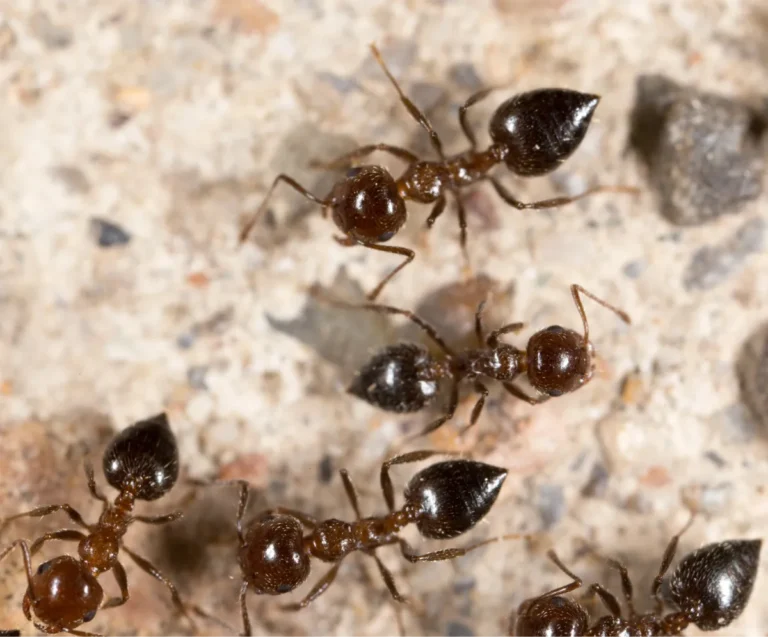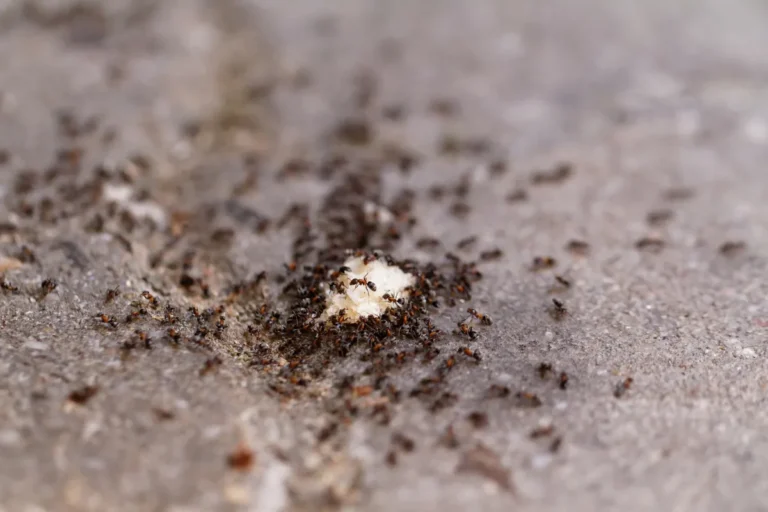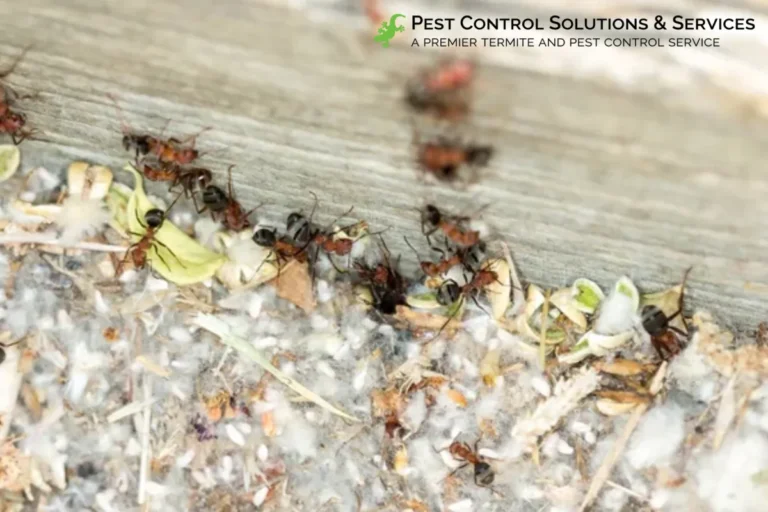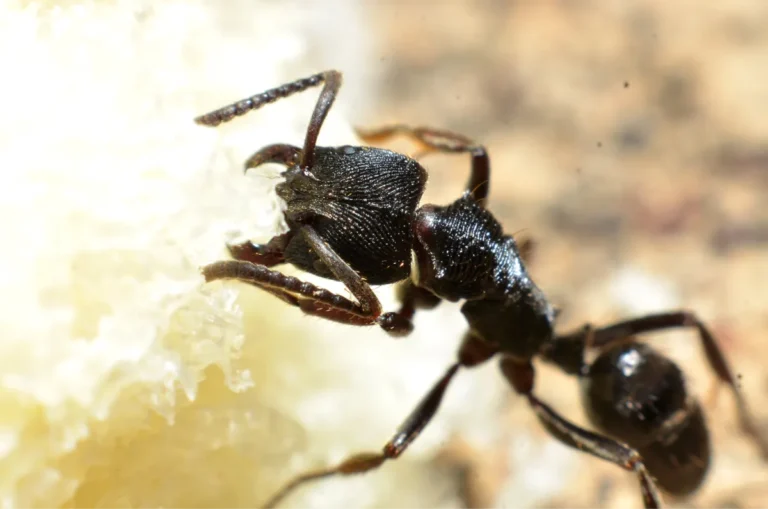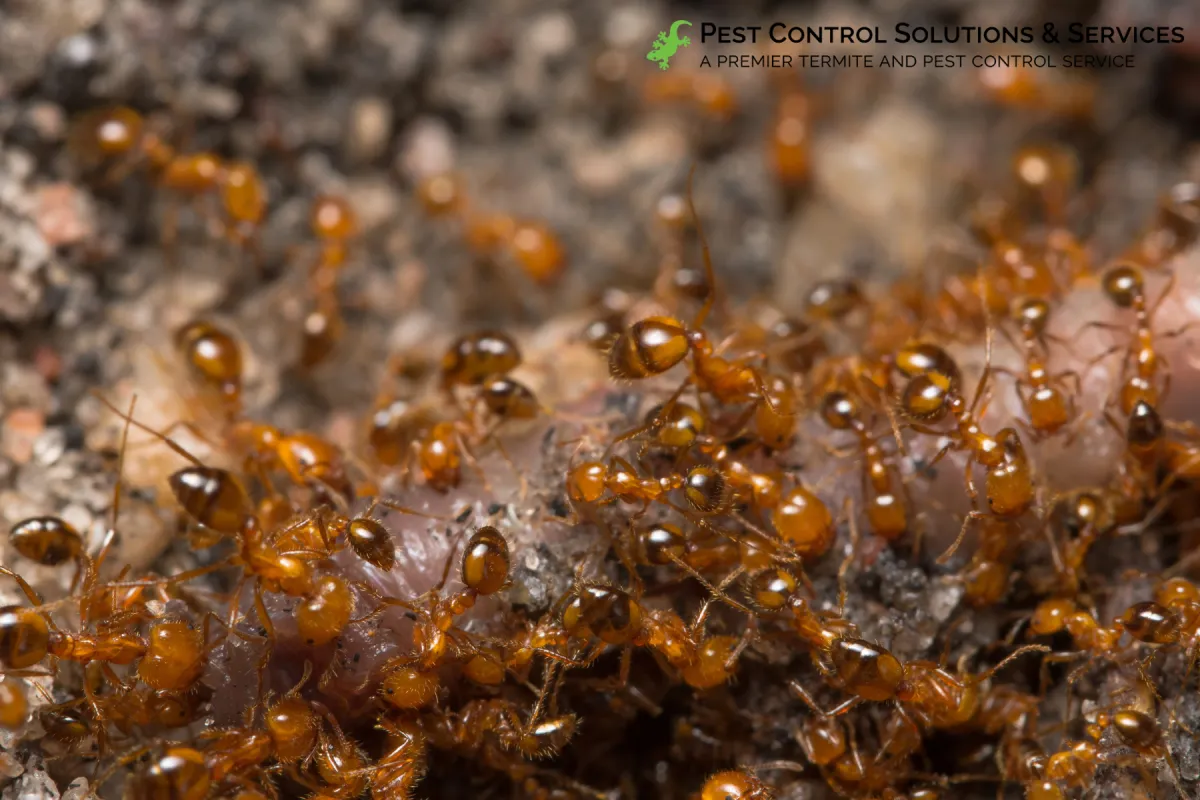
Professional ant control focuses on eliminating the entire colony rather than individual ants because visible foraging workers represent less than 10% of the total population. Killing individual surface ants triggers emergency egg-laying by the queen and causes colony budding, whereas non-repellent transfer baits target the egg-laying queen and destroy the infestation at its source.
Finding a line of ants marching across your kitchen counter or bathroom sink is frustrating for any homeowner. The initial reaction is usually to grab a can of household bug spray or wipe down the counter with soapy water to kill the insects you can see. However, crushing or spraying a few dozen surface workers barely makes a dent in the overall problem.
Ants operate as a single biological unit called a super-organism. The individual ants walking across your floor are simply workers sent out to gather food and water for a much larger population hidden deep underground, inside wall cavities, or beneath floorboards. To stop an ant invasion permanently, you have to destroy the hidden queen and her brood.
Understanding how ant colonies function helps homeowners make smart choices about long-term home protection. Here is a detailed look at how contact sprays compare to professional baits, the biological reasons surface treatments fail, common myths about ant baiting, and how professional care keeps your property safe.
Contact Repellent Sprays vs. Colony-Eliminating Transfer Baits
Comparing fast-acting contact sprays with non-repellent transfer baits shows why eliminating the queen is the only way to solve an ant problem for good.
During a recent home inspection for a family in Holiday, our technician looked into a kitchen where ghost ants kept appearing along the windowsill. The homeowner had sprayed baseboards with a strong store-bought repellent every few days. Instead of stopping the bugs, the repellent stressed the colony, causing it to split into three separate sub-colonies around the house. Once our team switched to slow-acting transfer baits, the foraging workers carried the active ingredient straight to all three queens, wiping out the entire network within a week.
Here is how contact sprays compare to professional transfer baits:
| Control Dimension | Contact Repellent Sprays | Professional Non-Repellent Transfer Baits |
| Primary Target | Visible surface foraging worker ants | The egg-laying queen, brood, and subterranean nest |
| Impact on Population | Kills 5% to 10% of visible workers | Eradicates 100% of the multi-chambered colony network |
| Colony Reaction | Triggers stress egg-laying and colony budding | Undetected transfer via trophallaxis (food sharing) |
| Long-Term Efficacy | Temporary reduction followed by population surges | Complete, permanent nest collapse within 7 to 14 days |
| Pesticide Resistance Risk | High; repels ants and forces nest relocation | Low; slow-acting active ingredients prevent detection |
The 5 Biological Reasons Killing Surface Ants Fails to Stop Infestations
Professional pest control in Holiday, FL targets the entire colony because ant biology makes surface treatments completely ineffective over time.
1. The Queen’s Tremendous Egg-Laying Capacity
A healthy ant queen can lay hundreds or thousands of eggs every day. When surface foraging workers die, the queen simply ramps up egg production to replace them, keeping the population strong.
2. Foragers Represent Only a Small Fraction of the Nest
Foraging worker ants represent less than 10% of the total colony size at any given time. The remaining 90% stays protected inside hidden wall voids, soil chambers, or beneath concrete slabs.
3. Colony Budding and Fracture Risks
Spraying fast-acting repellent chemicals scares sensitive species such as Pharaoh ants and Argentine ants. When threatened, these species undergo “budding,” where queens split off to form new sub-colonies in different rooms.
4. Trophallaxis (Social Food Sharing Mechanisms)
Ants feed their queen and larvae through a process called trophallaxis, regurgitating liquid food to pass nutrients through the nest. Colony control uses this habit to pass slow-acting bait straight to the queen.
5. Pheromone Trail Persistence and Trail Recruitment
Ants leave invisible chemical pheromone trails on floors to guide other workers to food. Crushing individual ants leaves these scent tracks intact, allowing new workers to follow the same path later.
Applying Our Pest Control Solutions & Services Protocol to Solve This
At Pest Control Solutions & Services, we bring decades of experience in the industry as a local team with the capability of a mid-sized pest management provider. Serving homeowners in Holiday, we prioritize the safety of your family and pets above all else. We use advanced products and techniques to deliver personalized, reliable protection for every property.
Our tailored approach relies on the highest-quality products combined with specialized treatments designed to eliminate pests at their root source. Through a customized approach, we build a solid barrier around your building’s exterior, keeping crawling insects from invading your indoor living spaces.
Here is how our comprehensive ant control protocol works:
- Species & Matrix Identification: Our skilled technicians identify the exact ant species on your property to select the right food bait matrix, whether the ants crave sugar, proteins, or fats.
- Non-Repellent Bait Deployment: We apply slow-acting, undetectable baits along active trails. Worker ants eat the bait without knowing it and carry it back to share with the queen and brood.
- Creating a Solid Exterior Barrier: Using advanced products and techniques, we establish a solid barrier along your home’s foundation line, weep holes, and entry points to stop outdoor nests from moving inside.
- Targeted Local Service: Partnering with an experienced exterminator in Holiday, FL ensures your property receives expert care from technicians who understand local soil types, moisture levels, and seasonal insect habits.
While helping a homeowner in Holiday who suffered from recurring carpenter ant issues along their back patio, our team located active nesting sites in nearby trees. By applying specialized baits and securing the foundation perimeter with targeted Holiday pest control, we eliminated the main nest and kept their wood siding completely safe.
Debunking the Myth: “Seeing More Ants After Baiting Means Treatment Failed”
A widespread myth among homeowners is that seeing more ants shortly after a professional treatment means the service did not work.
Here is why a temporary spike in ant activity is actually a good sign:
- Heavy Bait Acceptance: High-quality gel and liquid baits use attractive food ingredients. Seeing a surge of workers gathering around a bait station means the ants love the food matrix.
- Maximum Transfer Potential: The more worker ants that visit the bait, the more active ingredient gets carried deep into the subterranean chambers to reach the queen.
- The Delayed Collapse Timeline: Non-repellent baits are designed to work slowly so the workers stay alive long enough to feed the entire nest. The colony typically collapses completely within 5 to 14 days.
Ant Biological Specifications & Control Glossary
Understanding key biological terms helps you choose the right long-term care for your property:
Trophallaxis
The mutual sharing of liquid food among social insects, allowing non-repellent bait to pass seamlessly from worker ants to the queen and larvae.
Colony Budding
The defensive splitting of a single ant colony into multiple independent sub-colonies, usually caused by repellent sprays or physical stress.
Non-Repellent Active Ingredient
Specialized treatment chemistry that insects cannot smell or detect, allowing worker ants to walk over treated zones and share bait without alarm.
Polygyne Colony Structure
An ant nest network containing multiple egg-laying queens, requiring broad, systematic baiting rather than single-spot treatments.
People Also Ask (FAQ)
How long does it take for professional bait to destroy an ant colony?
Most non-repellent transfer baits eliminate a complete ant nest within 5 to 14 days. The exact timeframe depends on the colony size, species, and number of active queens.
Why do DIY ant sprays work at first, only for ants to return weeks later?
Household sprays kill visible foragers on contact but leave the queen unharmed inside her nest. The queen responds to lost workers by laying more eggs, resulting in an even larger invasion a few weeks later.
Should I spray bug killer on ants gathering around professional bait?
No. Spraying ants at bait stations kills the workers before they can carry the food back to the queen, halting the colony elimination process.
When should I schedule professional pest control?
You should schedule an inspection as soon as you notice ant trails along countertops, baseboards, or window sills. Partnering with a specialist for pest control ensures your home receives a thorough audit and a custom baiting strategy before the nest expands.
Stop Spraying Symptoms and Target the Source Today
Relying on surface sprays to manage ant problems provides only short-lived relief while driving nests deeper into wall cavities and foundation soil. A professional, colony-focused approach stops ant activity by targeting the queen and eliminating the root source.
At Pest Control Solutions & Services, we deliver customer-focused, eco-conscious pest control tailored to your family’s needs. Our experienced technicians focus on safety, clear communication, and personalized care to give you total confidence in your home’s protection.
Whether you need targeted ant solutions, comprehensive local service, or routine seasonal protection, our friendly team is here to help. Trust our local experts to protect your home and family with solutions built for long-term success.
Ready to eradicate ant trails and protect your home for good? Contact us today to schedule your consultation or request a free pest inspection with Pest Control Solutions & Services!